|
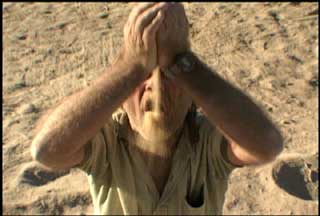
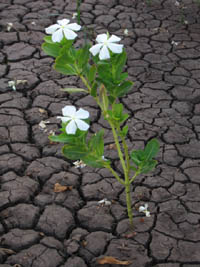
Introduction | Task | Process | Evaluation | Conclusion | Credits | You live in a small town in New Mexico; it's a hot and humid day. You grab your snorkel and flippers and head off to the community pool where you see a sign "Pool Closed Until Further Notice". Disappointed, you return home and decide to take a shower to cool off. You turn on the shower and guess what…no water! You grab a towel, head downstairs and see your father sitting grumpily at the kitchen table. He hasn’t yet had his morning coffee. Your mother looks depressed. She says it's because it hasn’t rained recently and her flowers can’t be watered. They are already drooping from the early morning heat and there's not a drop of water coming out of the hose. Your sister is cranky because she is thirsty and your pet dog, Rufus, pants beside his empty water dish. Knock! Knock! It’s your best friend who has arrived at your door desperate to use your toilet as his won’t flush. Your father reluctantly calls the local town water commission to discover there is no water left in the town. Unconcerned your father hands you five dollars to pick up some bottled water at the store and suggests you be patient and wait for the next rainstorm. Furious at his lack of concern, and nonchalant attitude, you’re bound and determined to find out where the water comes from, is it as important to others as it is to you, and what can be done to preserve this precious natural resource?  You and your friend start brainstorming. Where does the water come from? Where can you find water in your town? Lakes? Rivers? Fountains? Kitchen sinks? Puddles? Swimming pools? Reservoirs? Sewers? Creeks? Rain? Now, think about this: how are all the sources of water related? Throughout history, communities have survived or failed because of water. The water supply in a community is the vital lifeblood that keeps the city going. While the water supply is healthy, citizens take it for granted. If the supply is severely interrupted, the community and the world will ultimately die. You and your friend have decided to research the topic and report to town council to let people know how important water is in their daily lives and to ensure respect and conservation of this precious natural resource. As 'water advocates', you and your partner must give an oral presentation to town council supported by a concept map. 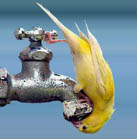 Please read through all of the steps before beginning the WebQuest. 1. Collaboration Your project leader will assign you an "online" partner. Keep in mind that you will be evaluated as a team. You will be responsible for helping one another in your learning. You can communicate with your partner through email or through the project's weblog site. 2. Brainstorming The first step is to brainstorm together to complete the KWL graphic organizer provided by your project leader. What do you and your partner already Know about water? What do you Want to learn about water? Save the KWL chart to complete the what you Learned column after you and your partner finish the WebQuest. 3. Internet, Library and Classroom Resources You and your partner are going to use Internet resources provided as well as classroom and library materials to find out the importance of water in your lives. Read each resource used carefully and take notes of important points which will assist you in the oral presentation. Review your notes on how to give an effective oral report. 4. Concept Map After viewing all resources, use Inspiration Software to create a concept map. This is a special form of a web diagram for exploring knowledge and gathering information. Show at least 10 relationships between humans and water that is, how important water is to our daily lives, ways we use water, and suggestions for conservation. Use specific facts and provide examples to support your oral presentation. Your concept map should show what you learned and be easy to understand. 5. Preparation Prepare your notes for your powerpoint presentation and report to "city council." Both members must take part in the presentation. Practice your presentation to ensure it is 3-5 minutes in length. Keep in mind you must answer the following in your presentation:
6. Complete your KWL With your partner, complete the "What you have learned " section of your KWL graphic organizer. Include facts that you didn’t know before you began this WebQuest. This could include interesting facts, conservation tips, water trivia, etc. 7. Student Showcase Now you and your partner will present your report and powerpoint presentation to "city council." Be sure to bring to their attention the impact that they have on the environment, not only on a local level but also globally. Are you a novice, informed or expert water advocate? 8. Rubric Obtain a rubric from the Project Leader. Place an "X" in the mark that you feel you deserve for each of the criteria listed. Send your rubric as well as your concept map to the project leader after your presentation.  Assessment of this Problem-Based Learning Adventure is on-going. Your participation and cooperation within your partnership is vital to your successful completion. You and your partner will both complete a self-assessment by obtaining a copy of the rubric from the Project Leader. As well, the Project Leader will provide you with a final assessment of the final product, of your ability to collaborate in an online environment, and of your overall performance in a Problem-Based Learning experience. Novice Water Advocate Informed Water Advocate Expert Water Advocate KWL Chart Concept Map
Final Product
Online Collaboration
followed most directions given occasionally needed teacher prompting worked cooperatively most of the time 
Now that you have successfully presented your concerns to town council, you have taken the initial steps to becoming an effective water advocate. Do you believe your town council will take action? Have they recognized the impact their water use has on their community as well as the global environment. What else could you do to help conserve this precious natural resource? 
This Problem-Based Learning Adventure is based on a template from Bernie Dodge. |